
English| EUR
Suggested for you
More currencies
Choose a language
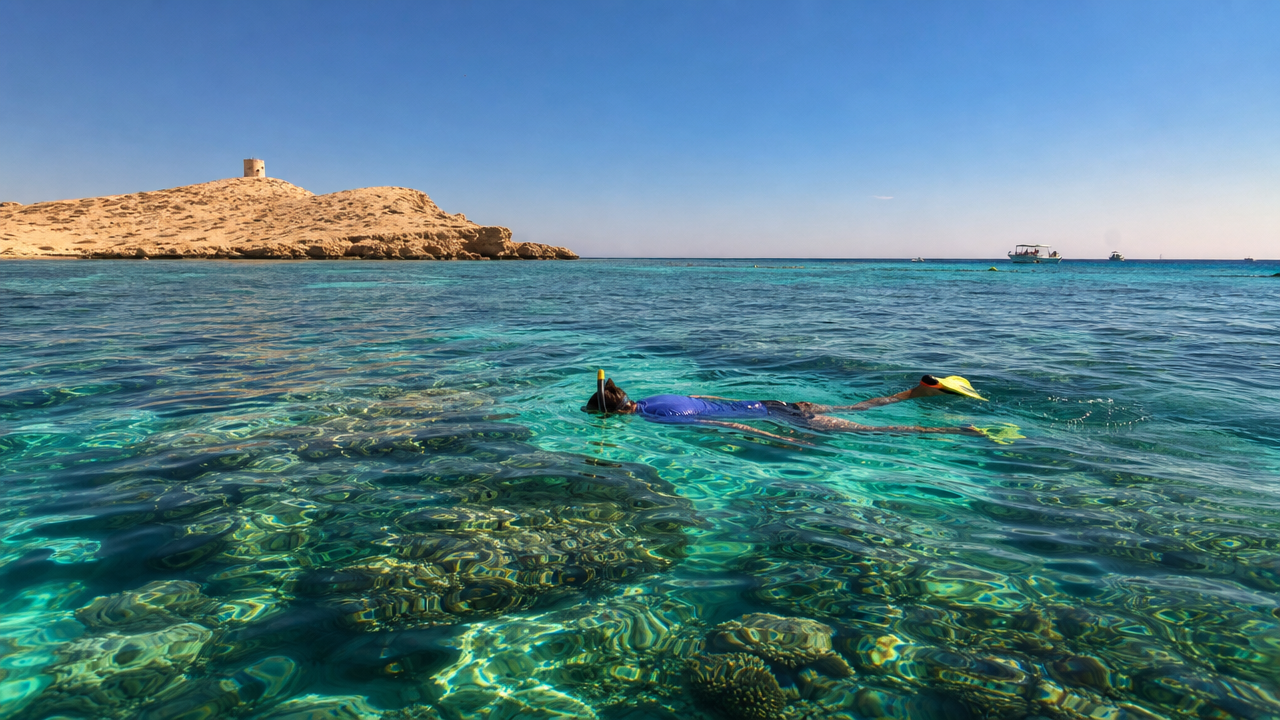
Nine limestone islands sit roughly 18 kilometres off the Al Batinah coast, ringed by coral gardens that Oman has protected by law since 1996. Trips run from the mainland and land you in water where turtles feed within arm's reach of the surface. This daymaniyat islands snorkeling oman guide sets out the reserve's operating pattern, the access rules and the conditions that decide whether a morning is worth the crossing.
Quick answer
The Daymaniyat Islands Nature Reserve operates 08:00–16:00 every day of the week, with a 3 OMR conservation fee charged per person, per day. The 08:00–12:00 window is the one that matters: morning brings the calmest seas and the best underwater visibility. Landing is restricted during turtle nesting season, roughly May to October, when in-water access continues but beaches close.
The Daymaniyat Islands were declared Oman's first marine nature reserve in 1996, and the protection shows in the numbers: more than 20 species of hard coral hold the fringing reefs, and hawksbill and green turtles return to the same beaches each summer to nest. The archipelago is uninhabited. There is no jetty, no shop, no shade structure — nine islands and a scatter of rock stacks, administered by the Environment Authority and reachable only by permitted boat from the Al Batinah shore. What a visitor is actually dealing with is a weather question dressed as a logistics question. The Gulf of Oman is calm at dawn and builds through the day as the sea breeze fills in; by early afternoon the same channel that was glass at 08:00 can be a short, awkward chop. Visibility follows the same curve, which is why daymaniyat islands snorkeling oman is planned around the morning rather than the afternoon. Water temperature runs warm year-round, but plankton blooms between June and August can cut clarity sharply for days at a time, while the November-to-April stretch tends to deliver the most reliable underwater sightlines. Nesting season adds a second layer: from roughly May through October the beaches themselves are off limits, and boats hold position offshore while snorkellers enter from the water. The reefs reward the effort. Shallow tables of Acropora sit in three to six metres off the sheltered northern sides, patrolled by parrotfish, angelfish and dense clouds of glassfish. Whale sharks pass through in late summer and early autumn. Blacktip reef sharks and eagle rays are common enough to be unremarkable to boat captains. Because the reserve is protected, nothing may be taken, touched or fed — fins kept clear of coral is the single instruction most often repeated on the crossing. Use the answer above as a planning frame rather than a schedule. Fix the date first, weighing sea state and nesting restrictions; confirm the operating pattern and the conservation fee through the dedicated sections on this page; then match a departure to the morning window. Daymaniyat islands snorkeling tours vary in length and inclusions, and the Daymaniat Islands day trip that suits a confident swimmer differs from one built around first-timers. Choosing correctly at that stage matters more than anything decided on the boat.
The best arrival window for snorkeling is 08:00–12:00, as morning trips offer the calmest seas and best visibility. Planning your visit between October and April provides the most stable conditions for underwater activities.
25°C to 30°C; clear visibility
These months offer the most stable sea conditions for snorkeling and whale shark sightings.
32°C to 40°C; higher humidity
Summer months bring intense heat and rougher sea conditions, often limiting access to certain areas.
—
Arriving during the week avoids weekend congestion and ensures a quieter experience on the islands.
Verdict: The optimal time for snorkeling is a weekday morning between October and April to ensure the calmest water and highest visibility.
The Daymaniyat Islands Nature Reserve is open for visitors daily throughout the week. Access to the reserve is available during the following operational hours.
The Daymaniyat Islands Nature Reserve sits off the coast of Al Batinah, Oman. Access is exclusively via authorized boat operators departing from marinas along the coastline.
Departure from Al Seeb Marina
Departure from Al Mouj Marina
Route 1 (Sultan Qaboos St) to coastal marinas
Plan to arrive for your scheduled departure between 08:00–12:00. Morning trips provide the calmest seas and best visibility for snorkeling.
The Daymaniyat Islands are a protected nature reserve, so preparation centres on permits, snorkel gear and reef-safe habits rather than last-minute shopping.
Everything you need to know about daymaniyat islands snorkeling oman
To enjoy daymaniyat islands snorkeling oman, you should book a boat excursion through an authorized operator that provides transit from the mainland. These guided trips typically include gear, safety briefings, and access to designated mooring areas for sea turtle and coral viewing.
Yes, all visitors are required to pay a conservation fee of 3 OMR per person per day. This fee supports the ongoing maintenance and environmental protection of the nature reserve.
The best arrival window is between 08:00 and 12:00. Morning trips offer the calmest seas and best visibility for snorkeling, allowing you to maximize your time in the water before the afternoon breeze.
The Daymaniyat Islands are a strictly protected nature reserve. Visitors must follow all environmental guidelines, including not touching coral, avoiding sea turtle nests, and ensuring no trash is left behind in the marine ecosystem.
Children are generally welcome on boat trips, but parents should ensure that the younger participants are comfortable in open water. It is advisable to check with your chosen boat operator regarding their specific age requirements and safety equipment for minors.
For a successful daymaniyat islands snorkeling oman excursion, pack sun protection, high-quality swim gear, and a waterproof bag. Since there are no permanent facilities on the islands, ensure you bring adequate water and snacks for your time at the destination.